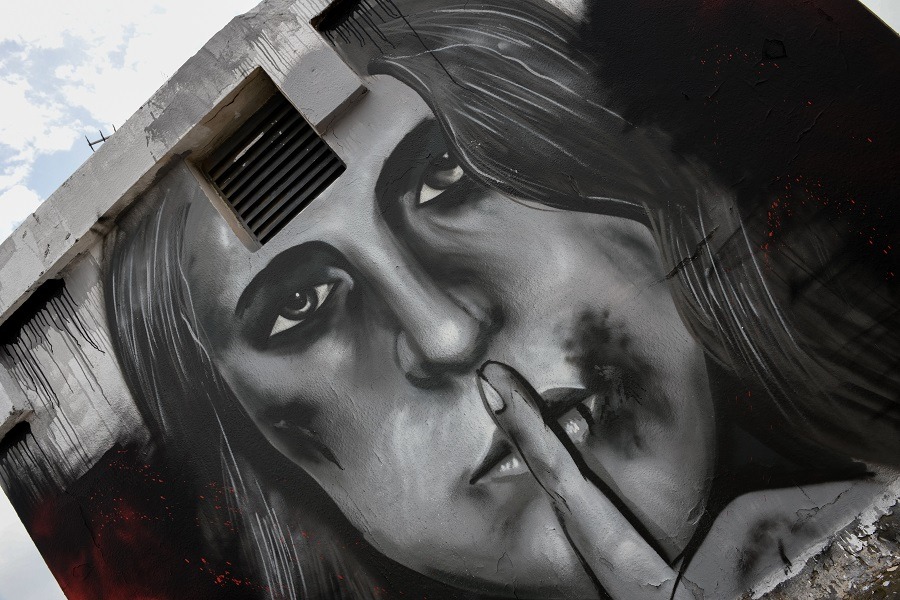
When, with the outbreak of the pandemic, strict restrictions on movement were imposed in almost every country to protect citizens from the SARS-CoV-2 virus, victims of domestic violence found themselves trapped at home and unprotected against their abuser, who is often a member of the family.
By Roula Skourogianni
Globally, as well as in several countries of the European Union, a large increase in domestic violence incidents was reported (with rates ranging from 20% to 30%) in the first weeks after lockdowns were imposed.
From Wuhan to New York, Paris and Australia, the pandemic caused health problems, while the lockdowns caused economic, psychological and social problems that triggered violence within the family — where, of course, such issues already existed.
- What matters, experts stress, is to realise that these are not isolated incidents but a social problem of global dimensions, which has escalated dramatically during the pandemic.
According to research by the Guardian, published in spring 2020, reports of domestic violence rose by 30% in China’s Hubei province, where the pandemic began, by 30% in Italy and Cyprus, and by 20% in Spain, particularly in Catalonia.
In most cases, victims trapped at home were unable to call the police, both for practical reasons and out of fear, experts say. In Spain and France, the authorities urged victims of domestic violence to seek help at pharmacies and supermarkets — the few shops that remained open and that victims could access relatively easily.
- In March 2020, UN Secretary-General António Guterres made a global appeal for peaceful coexistence at home and for every incident of domestic violence to be reported.
While around 50 women lose their lives to domestic violence every week in the EU, the number of victims rose noticeably during the pandemic.
- In Greece, from the start of the first lockdown, a protection network for victims of domestic violence was set up with the valuable cooperation of the competent bodies, such as the Hellenic Society of Forensic Medicine, the General Secretariat for Family Policy and Gender Equality and the Hellenic Chamber of Hotels. In addition to moral support and understanding, they made available to victims the SOS 15900 helpline, which remained on standby 24 hours a day, Counselling Centres, Shelters and free examination of victims by the public forensic services.
The restrictions have now been in place for more than 12 months, and libre spoke with the President of the Hellenic Society of Forensic Medicine, Mr Grigoris Leon, about whether domestic violence incidents are still being recorded at the same intensity now that restrictions continue, albeit somewhat relaxed, and about what the forensic authorities advise victims to do to protect themselves from abusive behaviour.
Read more here